


If you seek truth you will not seek victory by dishonorable means,
and if you find truth you will become invincible.
*Note – this is an excerpt from The Prophet’s Pulpit: Commentaries on the State of Islam
In this article, the author emphasizes the moral lesson of “meaning” taught by all prophets of God, which emphasizes our existence is not a mere coincidence but a result of divine intent. The article argues that believing in coincidence as the teacher of morality leads to imbalances and disparities. It calls for rebelling against unfair institutions and societal norms to demonstrate the true meaning of faith, which is loving and accepting each other.
All the prophets of God taught the moral lesson of meaning. This is a huge part of our faith.
By “meaning,” I mean that we are not the result of mere coincidence or accident.
From the moment of creation, there is an intentionality for our existence. Each of us exists because of a Divine intent for us to exist. We are not the product of happenstance. Human beings often forget the monumental importance of this. For if we exist by mere coincidence or accident, it is not a stretch to start believing that some of us are worth more than others, or that some of us have a greater right to exist or to more happiness than others. By its very logic, if coincidence is the teacher of morality and ethics, it also makes some rich and others poor. Those born wealthy through coincidence easily assume that luck has favored them. Because luck has favored them, they grant more value to themselves than to others. From this, we end up with the kind of imbalances seen all around. The population of a country like Britain can exploit and consume the populations of many countries around the world just so that the British can thrive. The population of a country like France can dominate, consume, and even destroy the population of Africa just so that those privileged by race, ethnicity, or nationality can thrive at the expense of those who are forgotten by history.
Study and reflect upon the prophets of God. The key lesson is that there is no coincidence and no accident. Everything created has a Creator. This logic is suspended only when we talk about the first cause of things. The logic of causality does not exist with the first cause but is a result of the first cause. Even those who do not believe in God ultimately throw up their hands at the first cause. They believe that at some point, somewhere, somehow, things like methane gas, carbon dioxide, and the raw material for stars came to be. When you ask them, “How did it come to be?” there is no answer. They say, “It just did.” But when you give them the same logic about God, “Well, God just is and we do not know where God came from,” they say, “No, we cannot accept that.” It is a severe logical flaw.
Nevertheless, if God exists, then there is a reason for the creation of human beings. This is what all the prophets from Abraham to Muhammad have taught. That reason is not necessarily a justification. It may be that only God knows why a particular individual was created. But one cannot deny that God chose for every human being on the face of the earth to exist, Muslim and non-Muslim. Not only this, but God also created for every human being an entire bureaucracy or institution for accountability. For every person, there is a qarin or jinn-type creature that is the negative face of positive energy (Q 37:51; 43:36; 50:23). For every person, there are angels meticulously recording their deeds (Q 82:10-12). You are never alone. In addition, God is always present with you (Q 50:16; 57:4). Every human being on the face of this earth is so important. That is why God tells us that if you kill one human being, it is as if you have killed all of humanity, and that if you save one human being, it is as if you have saved all of humanity (Q 5:32). It defies the logic and order of Divinity to destroy God’s creation, even if one human being. You negate Divinity by murdering one human being. You affirm Divinity by saving one human being.
All the prophets of God came to tell people, “Do not waste your life worshiping mythologies. Do not let those who pretend to know the Divine Will exploit you, demand sacrifices, and suck your blood. Do not accept the mythology that some of you are a low caste and others are a high caste. Do not believe that some of you exist because God made them a chosen people, and that others are not chosen.” Go back and read the stories of the prophets. Read them in relation to one another.
You will find the message is always the same: you are here because God chose for you to be here.
You are here because God has a purpose and intentionality. Whether you understand this purpose and intentionality or not, you are worth so much that even the heavens take record of you. The heavens follow everything you do, day by day, minute by minute. They do this for every human being. When you kill a human being, you commit an offense against the heavens. It is as if you have exercised your own will over and above God’s intent and objective when God said, “This human being shall exist.” You do the same when you act like certain human beings are worth more than others.
Why is it that there seems to be a disparity in the way the world responds to crises in different parts of the world? In the past, it has taken longer for the world to act in response to crises in Africa, whereas there has been more immediate action taken in Europe. There are ongoing conflicts in Yemen and Libya, and unfortunately, the world’s response has not been as swift as it could be. When it comes to supporting democratic movements, it seems that the Western world has been more willing to help predominantly White nations, whereas they are less willing to support nations with darker-skinned populations. The purpose of Islam, as well as the prophecies of Abraham, Moses, and Jesus, is to challenge and rebel against unfair institutions and societal norms. It’s important to understand this in order to have a deep connection with the faith. In loving and accepting each other, we demonstrate the true meaning of faith.

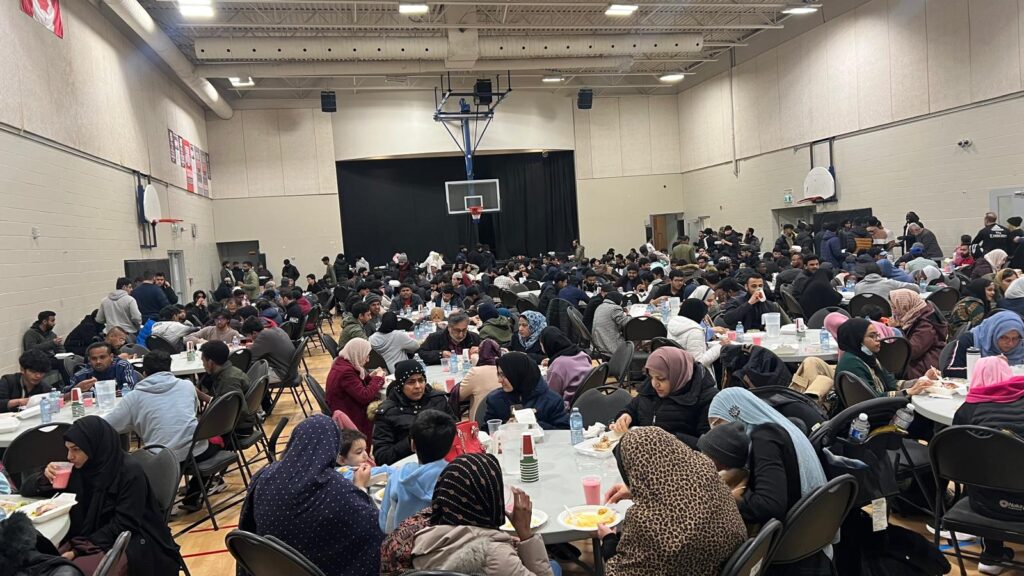
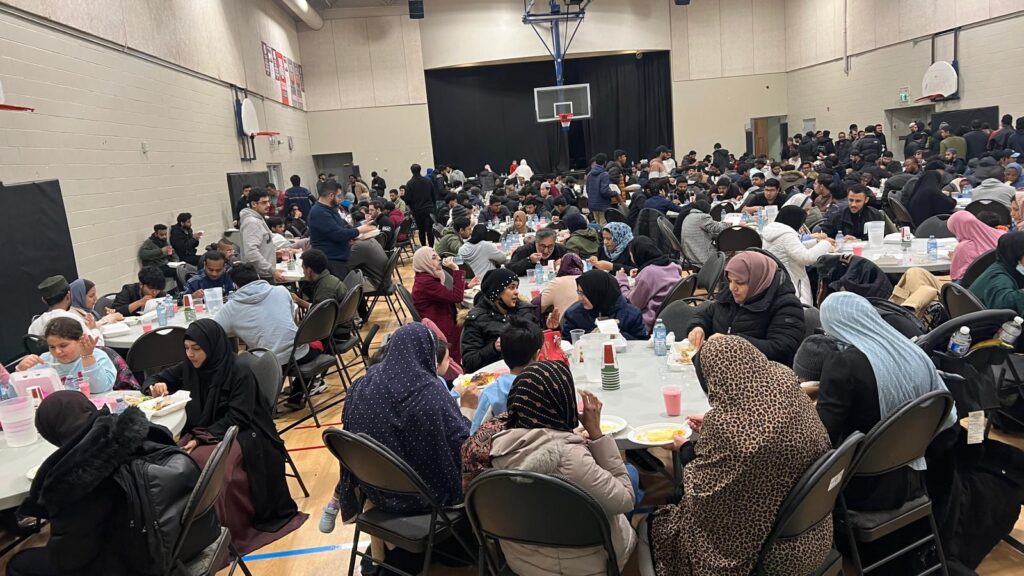
For over a year, the Muslim Soup Kitchen has been distributing 125 free meals every Saturday in London’s southeast end.
But without a functional kitchen to operate out of, the program can only continue for so long.
“In order to continue, even on the basis that we are going right now, it’s going to be very difficult without having an in-house kitchen,” said Yousef Al Hatoum, the first manager of the Muslim Soup Kitchen and chairman of London’s chapter of the Egyptian Community Centre Of Ontario (ECCOO).
The Muslim Soup Kitchen runs at the Hyatt Mosque and Centre on Hamilton Road, which occupies what was originally the Weslyan Methodist Church, built in 1873. ECCOO bought the 148-year-old structure in 2015.

The soup kitchen first began its work by delivering bi-weekly meals to My Sister’s Place in 2019. The meals were purchased from participating restaurants at a fraction of the cost.
But when the pandemic began, Al Hatoum said that the urgent need for free, hot meals for those living in the area became impossible to ignore.
The Muslim Soup Kitchen expanded its efforts in July 2020 to distribute a weekly hot meal of meat, rice and veggies.
“At the beginning we started with like 65 meals. They went up to 125 right now. That put a big pressure actually and depleted very quickly the [funds for food] because what we are trying to offer, it’s not just a simple meal,” said Al Hatoum.
Donations required to bring kitchen up to code
Al Hatoum said that ECCOO’s hope is to eventually renovate the former church into a community hall where all will be welcome, and use the basement classrooms for Arabic and Islamic education on weekends.
The building’s kitchen must also be brought up to code, so that the Muslim Soup Kitchen can rely less on paying restaurants for the meals.
“I see that out of those hundred plus people who are coming every Saturday, they are waiting for the meals, we serve meals from between one and two, and sometimes they are there at 11:30 and they are sitting on the stairs and they chat with each other,” said Al Hatoum. “The isolation has been broken. And this is what really makes us very happy.”
Zeba Hashmi, the Muslim Soup Kitchen’s current manager, said that the program does all it can do to help feed the hungry. Leftovers go to the Salvation Army, and volunteers offer out bags of non-perishable items.
She said any kind of help will go a long way to making a meaningful difference.
“There’s so much more that needs to be done, but everybody needs to do their little part,” Hashmi said. “Whether through donation or volunteering or, you know, any kind of labour you can put into any kind of effort that can help others. It’s so beneficial towards our city and creating that good feeling with other people who are struggling.”
“If you’re able to help in any which way, it’s a good thing.”
Donations for the Muslim Soup Kitchen are accepted through the Hyatt Mosque and Centre’s website.
Published on: CBC News > Original Link: https://www.cbc.ca/news/canada/london/muslim-soup-kitchen-london-ontario-1.6137038

*Note – this is an excerpt from The Prophet’s Pulpit: Commentaries on the State of Islam
In this article, we will explore the significance of the expression “hasanat” for modern Muslims and reflect upon the universal nature of goodness. We will also delve into the importance of perseverance and patience in Islam and how they are connected to one’s relationship with God. Additionally, we will discuss the role of parents in instilling these values in their children, especially in the face of Islamophobia and bigotry.
I wish modern Muslims would reflect upon that one expression: hasanat.
Goodness is universal. All human beings smile. All respond to kindness and love. All respond to compassion and joy. We do not need sophisticated dogma and philosophy to understand the nature of goodness that should flow from our relationship with the Most Compassionate, Most Merciful. How can someone claim to have a relationship with the Most Compassionate and Most Merciful and not be compassionate and merciful themselves? There is something broken there. If you want to test the state of your faith, look at yourself through the eyes of those who know you. Do they know you as a loving, compassionate, and merciful human being? Do you reflect the ethics that come from your Lord? Persevere because God does not waste good deeds.
Persevere because God knows that to focus and concentrate in prayer is difficult. Persevere because God knows if and when you want to quickly finish your prayers and run off to the next thing. Persevere because God knows that this temporal world runs at an alarming rate that is not compatible with human psychology. Persevere because God knows that many around you will attempt to distract you from the path of your Lord. Persevere because God knows that there are periods in history of raging hardship and genocide in which the average Muslim is tested, and says, “Where is my Lord?” Persevere because God knows there will be many pretenders who claim to know the Lord, but who act in cruel and ugly ways. For all these reasons:
Persevere with patience. God does not waste the results of good deeds. (Q 11:115)
Ultimately, in Surah Hud, the Qur’an ends with a proclamation and a reminder from God:
And thy Lord would never destroy the towns unjustly, while their people were reforming. (SQ 11:117)
God does not allow people, cities, countries, and nations to deteriorate and be swept away other than by their own injustice. God’s law of creation is that justice brings goodness and blessings, and injustice destroys a people. This is why we need patience and perseverance. We need to teach this to our children so that they do not despair and have doubts about the faith and their relationship with God. If you teach them the nature of patience and perseverance, and they see you as an example of this, you will affirm in them an unwavering belief in goodness and beauty. They will follow you. They will emulate you. They will do as you do. So, be an example to your children. Especially at this time, as Muslims in the West are tested by Islamophobia, hatred, and bigotry. Your children confront it every single day they go to school or college. They have nothing, and you have nothing, other than your relationship with the Lord.

*Note – this is a summary of the following article: https://www.searchforbeauty.org/what-is-shari-ah/a-primer-on-shari-ah-and-islamic-law/
In this summary, we explore the central role of Sharia law in Islam, its sources, and its interpretation. We examine the multi-layered and complex nature of the Qur’an and Sunna and the need to approach Sharia law systematically and consistently with the ethical objectives of Islam. We also look at the different schools of thought in Islamic law and the separation of Shari’a and fiqh, emphasizing their purpose in serving the best interests of human beings.
The role of Sharia law in Islam is central, yet it remains the least understood aspect of the faith among both Muslims and non-Muslims. In the Western world, some view a Muslim who believes in Sharia law as a fanatic or fundamentalist. However, to make such a sweeping generalization is akin to accusing every Jew who believes in Rabbinic or Talmudic law of being a fanatic. The conception one has of Islamic law and the interpretation one follows is crucial to understanding it.
Islamic law is derived from two sources: the Qur’an and the traditions of the Prophet (known as the Sunna and hadith). The Qur’an is considered the literal word of God in Islam, believed to have been transmitted by the Angel Gabriel to the Prophet Muhammad. The Sunna, on the other hand, represents an amorphous body of literature containing hundreds of reports about the Prophet and his companions during the various stages of early Islamic history.
Unlike the Qur’an, the Sunna is not represented by a single agreed-upon text and was not systematically collected and documented until at least two centuries after the death of the Prophet. This means that many reports attributed to the Prophet are apocryphal or of dubious historical authenticity. In addition, the Sunna is different from the Qur’an in terms of style, language, and range of topics and issues addressed. The Sunna is complex and generally inaccessible to the layperson, and its literature reflects a wide array of conflicting and competing ideological orientations and outlooks.
Despite these challenges, Sharia law is essential to the Islamic faith. Many of the basic rituals of Islam were derived from Sunna traditions, and it helps contextualize the Qur’anic revelation and understand the historical framework and role of the Islamic message. However, to approach Sharia law from a selective or non-systematic perspective can lead to imbalanced treatments that favor a particular ideological orientation.
The Qur’an and Sunna are multi-layered and multi-faceted sources of guidance for thinking about ethics, morality, law, and wisdom in Islam. When considered together, they tell a complex story. They can be a source of profound intellectual and moral guidance and empowerment, but also pose a danger if approached from the wrong intellectual or moral commitments. Therefore, it is crucial to engage Sharia law systematically, interpret it consistently with the Qur’an, and read it in a way that promotes, rather than undermines, the ethical objectives of Islam.
In Islamic law, there were various ways of producing legal rulings other than just looking at the Qur’an and the traditions of the Prophet. Jurists used rule by analogy and principles such as equity and public interest to make the law responsive to changing circumstances.
There are many volumes of Islamic law, and it’s not just contained in a single book or few books. In the Sunni world, there are four surviving schools of thought: the Shafi’i, Hanafi, Maliki, and Hanbali. In the Shi’i world, there are two surviving schools of thought: the Ja’fari and Zaydi.
Each of these schools has its own jurisprudential tradition of legal rulings and opinions, and the sages belonging to a particular school of law wrote legal treatises that became far more influential than the texts written by the founder of the school.
Islamic law is separated into two distinct categories: Shari’a and fiqh. Shari’a is the eternal, immutable, and unchanging law, or Way of truth and justice, as it exists in the mind of God. In contrast, fiqh is the human law, which is the human attempt to reach and fulfill the eternal law as it exists in God’s mind.
The moral and ethical objectives of the Qur’an play a central and pivotal role in the process of legal analysis. The specific rulings of the Qur’an are not objectives in themselves but are contingent on particular historical circumstances that might or might not exist in the modern age. The objective of the law is to achieve the ultimate moral and ethical objectives that represent the essence of Godliness on this earth.
All the jurisprudential schools agree that the purpose of the Shari’a is to serve the best interests of human beings.

*Note: this is a summary of the following article: https://www.searchforbeauty.org/islam-101/what-muslims-believe/
This article explores the core principles of Islam as a way of life, focusing on the five pillars of Islam. These pillars serve as the foundation of the Islamic faith, aimed at developing a strong relationship with God and fostering piety, self-restraint, and humility.
Islam is more than just a religion – it’s a way of life.
At the heart of this way of life are the five pillars of Islam, which form the foundation of the Islamic faith. These pillars include the testament of faith, prayer, fasting, almsgiving, and pilgrimage to Mecca.
The testament of faith is the most fundamental and critical pillar of Islam. Muslims believe in one God, who has no partners or equals, and that Muhammad is the messenger of God. Prayer is also an essential pillar of Islam and involves five formal ritual prayers a day, with congregational prayer held every Friday. Fasting is a month-long practice of self-discipline during Ramadan, where Muslims abstain from eating and drinking during daylight hours, and almsgiving involves giving a set percentage of one’s wealth to the poor annually. Lastly, pilgrimage to Mecca is required once in a lifetime for those who can afford it and are physically able to do so.
These pillars aim to develop a strong relationship with God, teach piety, self-restraint, and humility, and emphasize the shared brotherhood of all Muslims. Enjoining the good and forbidding the evil is also a religious duty of Muslims.; however although all Muslims agree on the pillars of Islam, there have been debates and controversies surrounding the duty of enjoining the good and forbidding the evil, particularly when it comes to political legitimacy, law enforcement, and rebellion. But at the end of the day, the pillars of Islam serve as the backbone of the Islamic faith, encouraging Muslims to surrender themselves to divinity and strive towards realizing the truly sublime.

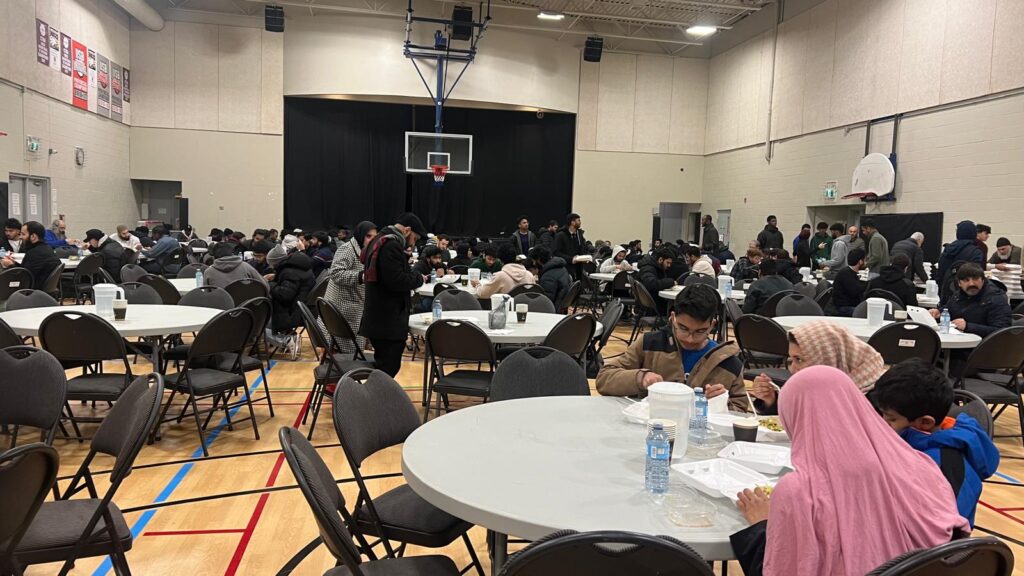
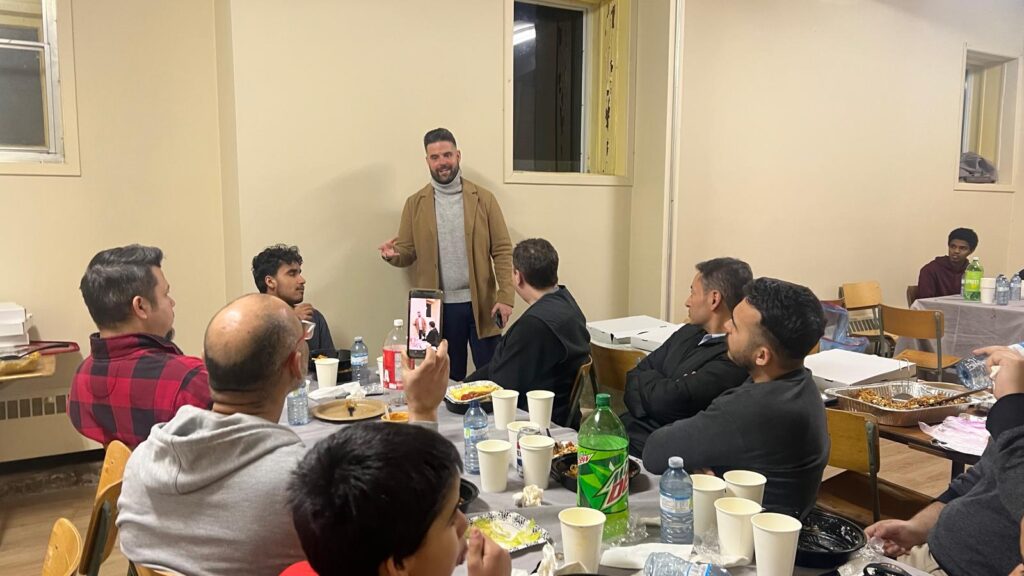
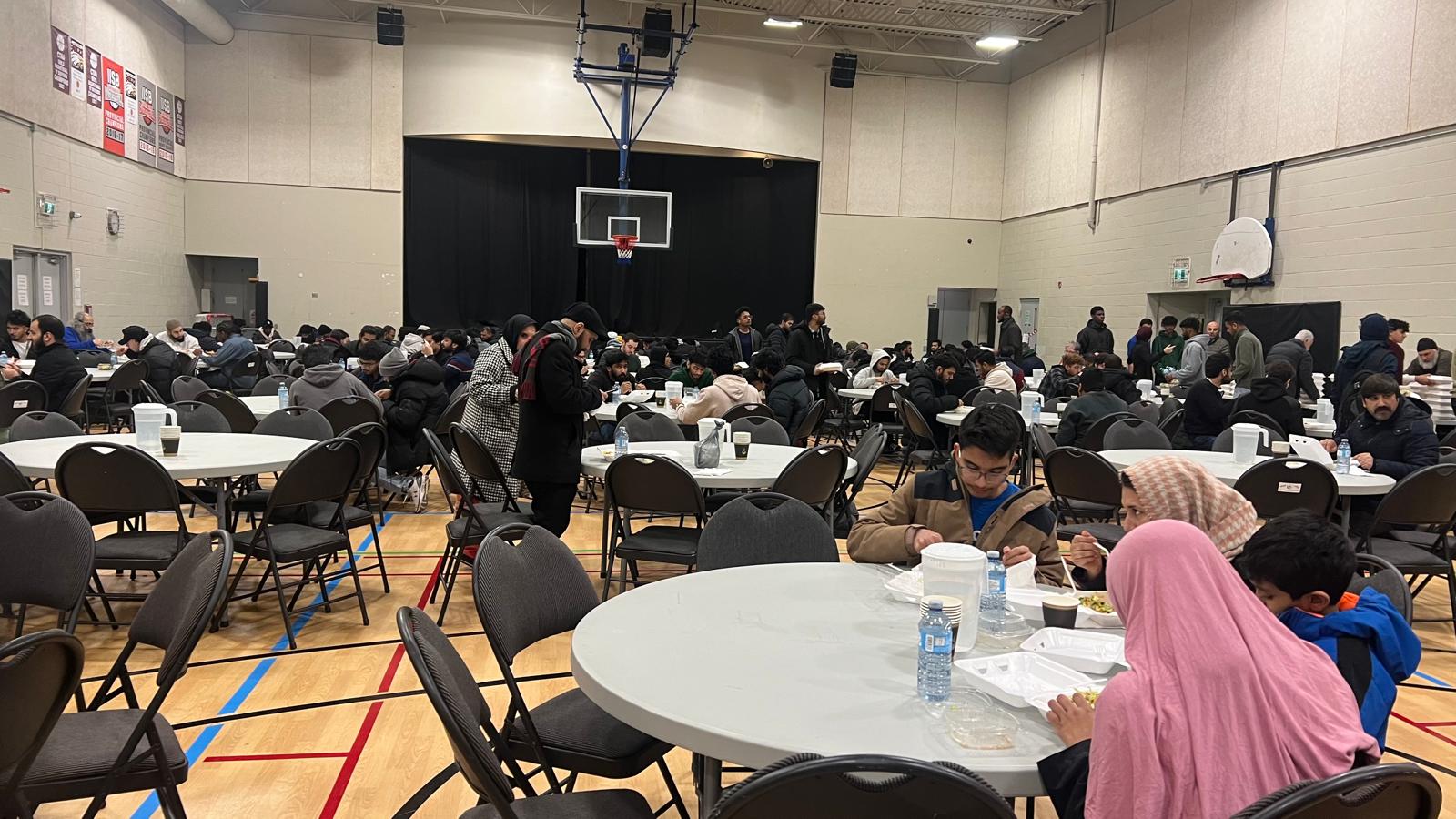
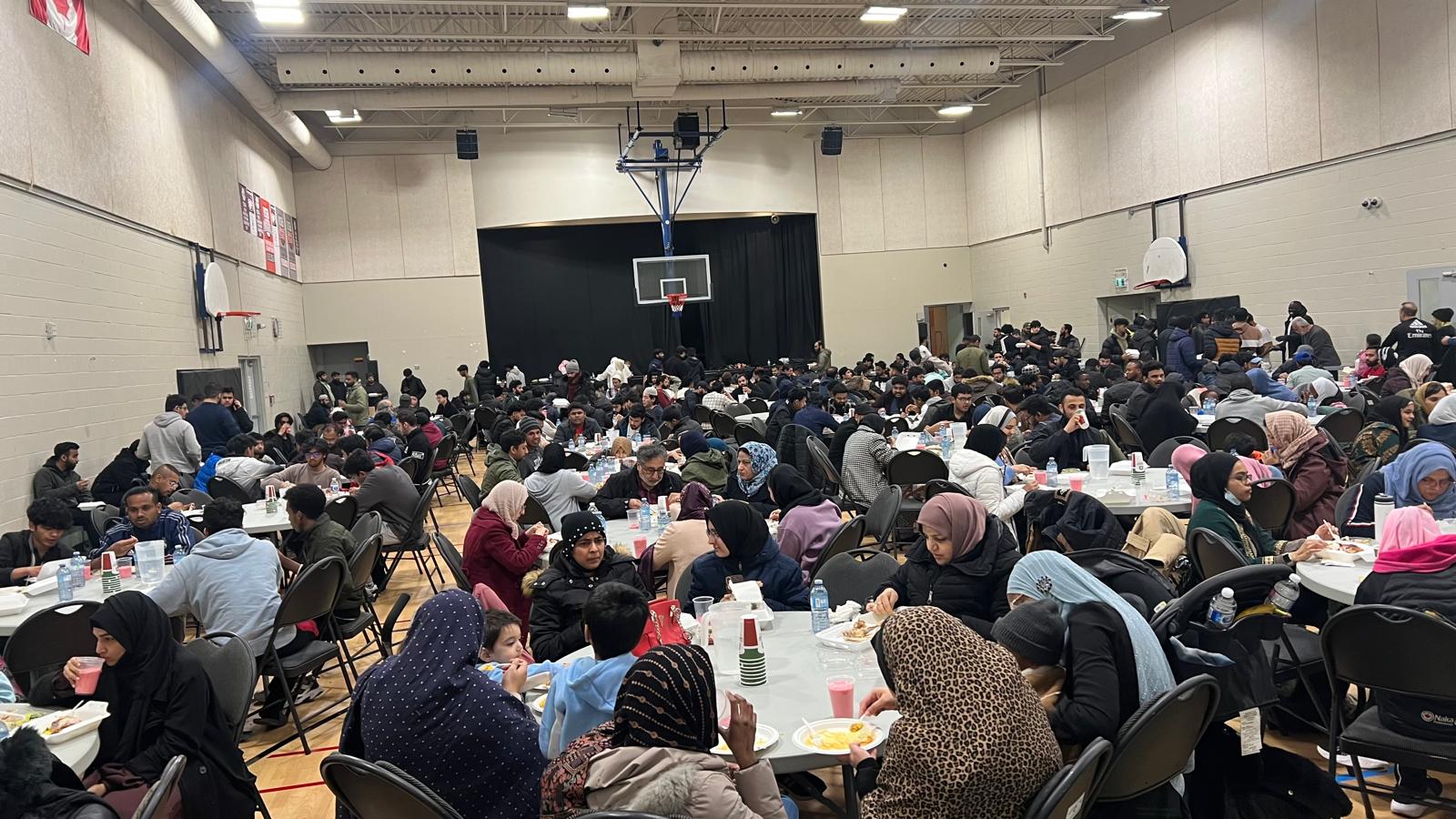
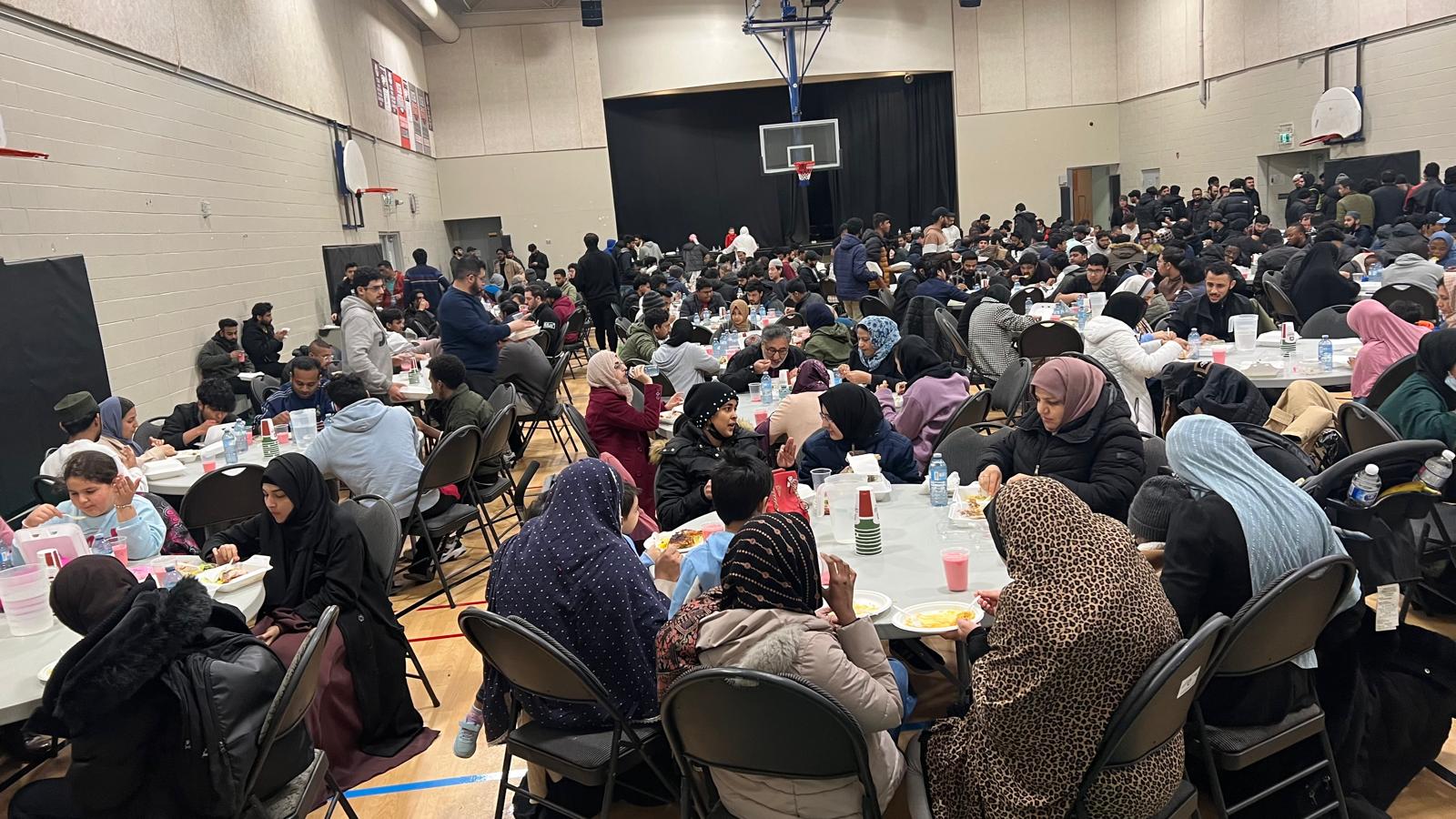
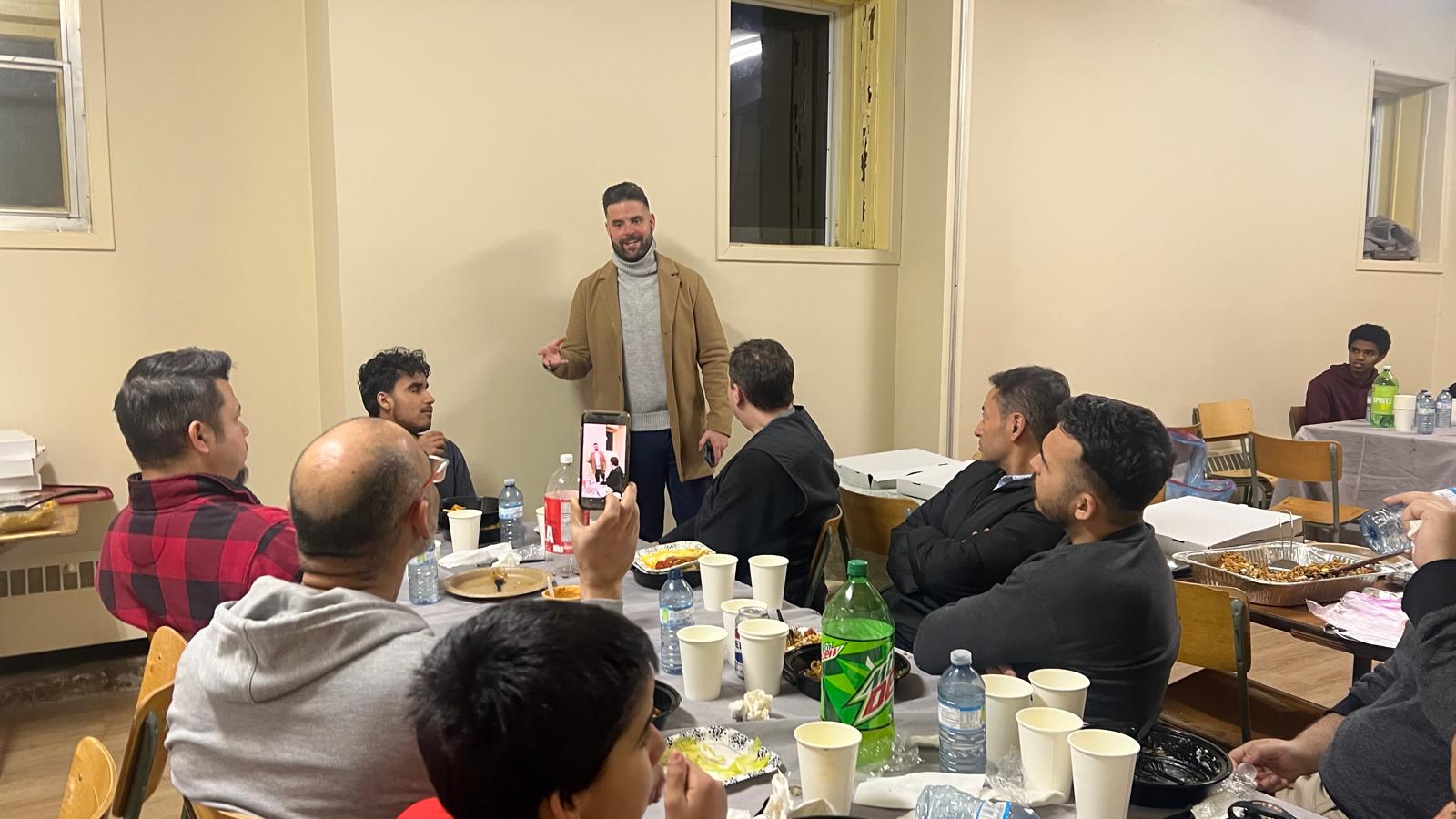
Alhamdulilah, Every Saturday we distribute food, clothes and others for needy Canadians in London Ontario

*Note: this is a summary of the following article: https://www.searchforbeauty.org/islam-101/god-and-the-purpose-of-creation/
In this article, the concept of submission in Islam is explored. Islam means submission to God, not to anyone or anything else. True submission must come from love and a longing for unity with the Divine, and it requires self-mastery and responsibility for one’s actions. The article also discusses the harms of a militarized view of submission and highlights the importance of embracing moral growth and exploring limitless potential for development.
Islam means submission, and its central demand is for people to submit to God, not to anyone or anything else. Humans should work to overcome their weaknesses, manage their desires, and master themselves. Only by achieving self-mastery can they truly submit to God. If someone’s self is dominated by ego, desires, fears, or whims, their submission to God is less meaningful since they can’t submit what they don’t control.
The Qur’an states that humans are God’s representatives on Earth, responsible for civilizing it and not causing corruption. Individuals are accountable for their actions, and no one can carry the sins or responsibilities of another. Because humans are directly accountable to God, their submission means they should not submit to anyone else. Giving up one’s autonomy to another person goes against the relationship with God. Everyone must exercise their conscience and mind, and be responsible for their thoughts and actions. If someone surrenders their autonomy to another, they are breaking their bond with God.
The first duty of a Muslim is to gain self-mastery; the second is to avoid unlawfully giving up their autonomy to another person; and the third is to fully and completely submit to God.
This submission should not be reluctant, desperate, or motivated by fear of punishment. True submission must come from love and a longing for unity with the Divine. Those who submit should find fulfillment in love, not just obedience.
However, some interpretations of Islam, like Puritanical-Salafi, have portrayed submission as a soldier’s obedience to a superior officer. This approach reduces God’s message to a set of commands, as if the Qur’an were a military manual. This militarized view has caused significant harm to Islam. It focuses on power rather than beauty and love, which are the true essence of submission to God.
True submission involves loving God and being loved by Him. To love God, one must know the truth about the Divine without projecting human limitations and anxieties. One should not fall in love with a constructed image of God, but rather with the limitless, infinite Divine. This love should not be used as a means to control others or assert power over them.
Submitting to the infinite Divine means embracing limitless potentialities. Obedience to what one believes is God’s will is necessary, but it is only the first step. Submission to God is like submitting to an unquantifiable reality, like nature or the universe. It involves being in love with love itself and the endless possibilities of divine beauty.
This understanding of submission is essential for reclaiming the true message of Islam. Muslims have a relationship with God that involves bearing witness to moral virtues like justice, mercy, and compassion. These virtues are part of God’s beauty and are expressed through kindness and goodness toward humanity. The beauty of submission is not in gaining power over others but in serving them.
This approach assumes a process of moral growth. A relationship with the Divine should involve a never-ending pursuit of beauty and an exploration of limitless potential for moral development. A connection with God should be an ongoing journey toward greater beauty, rather than being confined to a fixed set of laws.